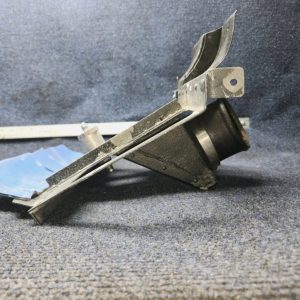
P/N 2455038-2 provides aircraft owners, maintenance facilities, restoration specialists, and aviation parts buyers with a model-specific engine-compartment component for an appropriately configured Cessna Cutlass.
The Cessna 172RG Rear Right-Hand Baffle can support airflow management, while the Cessna 172RG Engine Baffle and Cessna 172RG Cooling Baffle descriptions should not imply universal interchangeability.
Whether described as a Cessna Cutlass Engine Baffle, Cessna 172RG Baffle Assembly, Rear RH Engine Baffle, or Aircraft Engine Baffle Assembly, precise configuration verification remains essential.
Clear descriptions of Cessna 172RG Engine Compartment Parts help maintenance professionals estimate the full scope of the repair.
A Cessna Aircraft Engine Baffle can form part of an Engine Cooling Baffle Assembly, while a Cessna Cutlass Cooling System Part must correspond with the installed aircraft and engine configuration.
Understanding P/N 2455038-2
A component should not be accepted as P/N 2455038-2 solely because it appears to fit the rear right-hand engine area.
Informal cross-references should not replace current parts information or approved technical data.
Understanding Cessna Engine Cooling Airflow
The rear right-hand baffle helps guide cooling air through intended paths around the engine installation rather than allowing it to escape through uncontrolled gaps.
Engine condition, instrumentation, seals, cowling, operations, and surrounding baffles should be considered during troubleshooting.
Verifying Fitment Before Purchase
Aircraft-specific verification helps prevent unsuitable substitution and expensive rework.
Qualified maintenance personnel should determine whether the component is suitable for installation.
Maintaining Original Baffle Geometry
The exact material, thickness, temper, finish, and construction should be confirmed through applicable technical information when required.
Unauthorized bending, hammering, heating, grinding, drilling, or trimming can damage the assembly and affect its relationship with adjacent components.
Rear RH Baffle Damage Inspection
A detailed inspection provides stronger evidence than a general good-condition description.
The assembly should be checked for evidence of engine vibration, cowling contact, exhaust heat, fluid contamination, impact, improper removal, and unsuitable storage.
Cessna Cooling Air Seal Replacement
Old seals may be useful as templates even when they are unsuitable for continued service.
Excessively stiff or incorrectly positioned material can interfere with cowling installation or fail to seal properly.
Engine Compartment Contamination Concerns
Surface staining may be minor, while pitting, material loss, exfoliation, or corrosion around holes can require more extensive action.
Oil, fuel, cleaning chemicals, battery residue, exhaust deposits, moisture, and salt exposure can affect engine-compartment sheet metal and protective finishes.
Crack and Fastener-Hole Inspection
Cracks often begin near holes, corners, bends, bracket ends, and areas affected by vibration or forced alignment.
Fastener type, diameter, grip, spacing, and installation method should correspond with applicable data.
Supporting Components Around the Rear RH Baffle
Organized inventory management supports a more efficient Cessna Cutlass maintenance project.
Used Cessna 172RG Engine Compartment Parts should be evaluated individually rather than accepted solely because they came from the same donor aircraft.
Baffle-Related Temperature Problems
Complete troubleshooting helps prevent unnecessary replacement and repeated maintenance.
Cleaning or replacing one baffle should not be presented as a guaranteed cooling improvement.
Cessna Baffle Repair Considerations
A localized defect may be repairable, while widespread cracking, severe corrosion, or distorted geometry may support replacement.
Patches or replacement brackets should not create interference with the engine, cowling, controls, wiring, hoses, or exhaust system.
Replacement Baffle Purchase Considerations
A clean appearance can improve presentation but does not replace detailed inspection.
The listing should state whether the component is new, used, repaired, inspected, untested, serviceable, or offered for parts.
Aircraft Engine Baffle Pre-Purchase Guide
Any uncertainty regarding orientation, completeness, engine clearance, or aircraft compatibility should be resolved before shipment.
- Compare the baffle with applicable parts information, the removed component, surrounding panels, mounting locations, dimensions, brackets, seals, and cowling clearances.
- Do not treat clean paint, straight appearance, or donor-aircraft history as proof of current serviceability.
- Confirm the invoice, payment protection, packaging method, shipping insurance, inspection period, return conditions, and stated component status.
Preventing Damage During Storage
Loose seals and hardware should be bagged, labeled, and secured separately.
During storage, the component should remain supported in its natural shape rather than leaning under loads that may cause distortion.
Professional Engine Baffle Installation
The engine compartment should be inspected before the replacement component is positioned permanently.
Adjacent baffles, seals, brackets, cowling surfaces, wiring, hoses, controls, and exhaust components should remain free from unresolved damage or interference.
Disciplined installation and documentation protect the Cessna 172RG Rear RH Baffle Assembly
Routine Cessna Cutlass Baffle Care
Cleaning should preserve evidence long enough for maintenance findings to be documented.
Wiring, hoses, and controls should not rub click here against the baffle or create repeated loading.
Buying a Rear Right-Hand Engine Baffle
The Cessna 172RG Rear RH Baffle Assembly
The strongest purchasing decision begins with confirming the complete part number, donor-aircraft details, aircraft serial applicability, engine configuration, right-hand position, dimensions, mounting geometry, seal condition, repair history, included hardware, and documentation.
Whether the component is purchased for scheduled maintenance, corrosion replacement, cooling-system repair, accident recovery, restoration, or spare-parts support, transparent information and professional oversight provide the strongest foundation.
With complete evaluation and continued care, the Cessna 172RG Rear RH Baffle Assembly